There is an advertising line used in Mérida that contains a whole dialectology lesson: «vaya biem». It is not a typo. It is a half-joking way of writing something people in Yucatán do without noticing: pronouncing a word-final -n as an m. Pan becomes pam, Yucatán becomes Yucatám, limón becomes limóm. It has become a badge of identity, a T-shirt and a local joke.
What to know before going any further
There is no such thing as «Mexican Spanish». There are several, and they differ far more than films and television suggest, since both have sold the central accent as if it were the only one. Studies usually divide the country into four large areas (northern, central, coastal and Yucatecan), and underneath that division runs a very simple principle, shared by almost all of Latin America: highlands against lowlands.
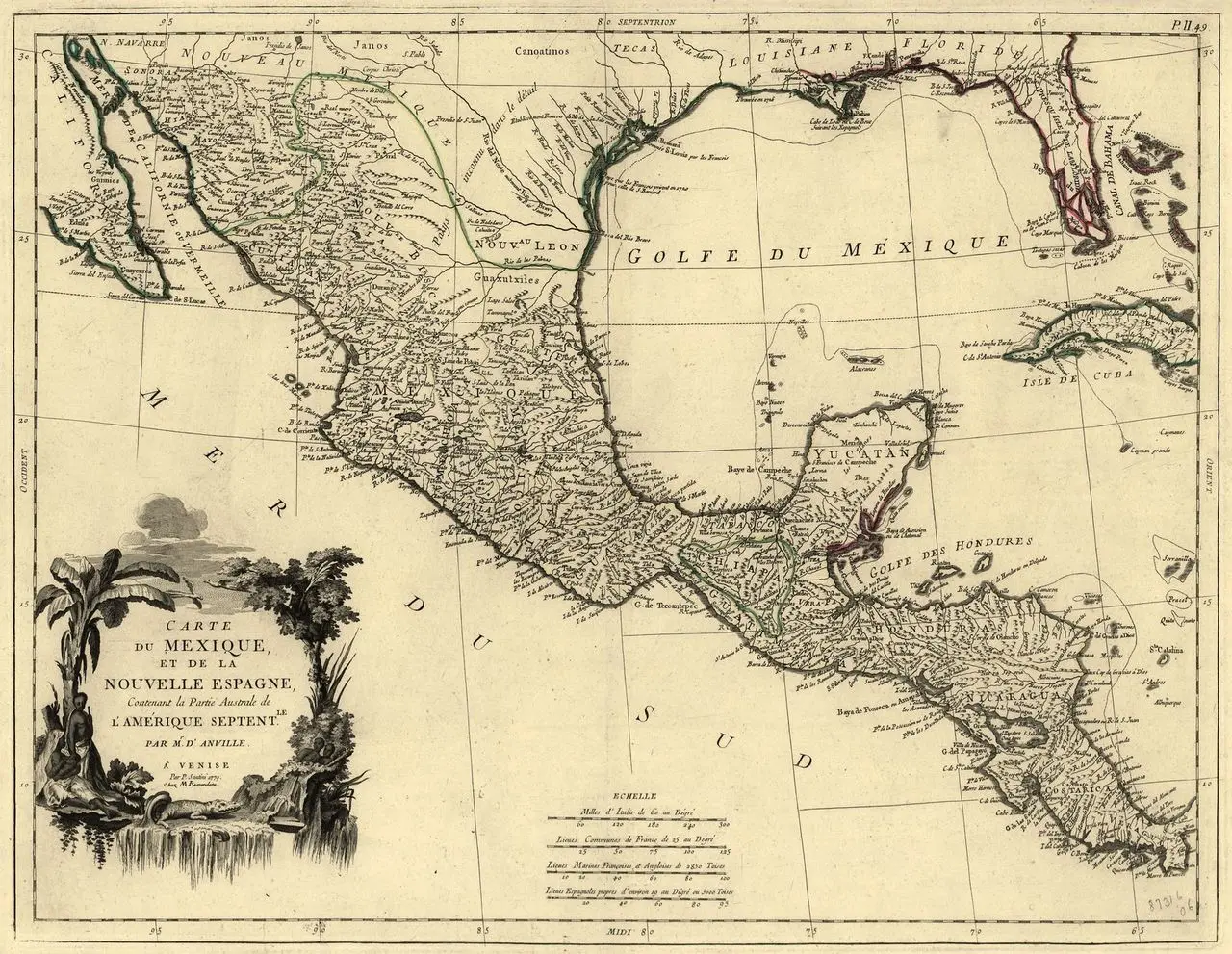
The map
Four areas and one principle running through them
The first three areas form what is properly called the Mexican zone. The fourth, Yucatán, together with Chiapas, is grouped with Central America in what is known as the Mayan-Central American zone. Chiapas formally joined Mexico in 1824; the dispute over Soconusco and the delimitation of the border with Guatemala continued, however, until the 1882 treaty. That shared history can also be heard in the region’s Spanish.
On the high plateau and inland, consonants are pronounced firmly and vowels get swallowed. On the coast it is the other way round: vowels hold their shape and consonants weaken until they disappear. It is the same tension you find between Bogotá and Cartagena, or between Quito and Guayaquil.
A telling example from the centre and north-east: partes can end up sounding like parts, with no e at all, and necesito like nessito. Unstressed vowels weaken and sometimes vanish, especially before an s: cafecito becomes cafsito, fósforo becomes fósfro.
The northern zone
The north turns hiatus into diphthong, and nobody hides it
Northern Mexico has always looked upwards, towards Texas and Arizona, more than towards the south of its own country, and the way people speak follows that character.
The most striking feature is diphthongisation: peor sounds like pior, teatro like tiatro, poeta like pueta, toalla like tualla. And this is not careless speech: in the north it is perfectly acceptable in educated registers.
The north is also «sh» territory: muchacho relaxes into mushasho. And it uses the apical s made with the tip of the tongue, the one you hear in central and northern Spain, rather than the predorsal s of the rest of Latin America.
The central zone
Tense consonants and a circumflex melody
Mexico City is here, and with it the linguistic model for most of the country, the north excepted, which goes its own way. Three features define the accent.
Consonant clusters are pronounced in full
Directo, examen, taxi, acción, apto: the implosive k, p and t are all there, tense and complete. Across much of Spain they weaken or disappear.
Final s is lengthened
Salsas, cacerolas end in a long, tense, almost whistled s. It is the exact opposite of what happens on the coast.
Assibilated r
The r of perro, or the final r of color, turns into a kind of buzz somewhere between r and a voiced «sh». The same happens to the cluster tr, so that otro and ocho can be confused. In Mexico City this carries prestige, particularly among middle-class women.
And then there is the intonation, which is usually the first thing a listener recognises without being able to name it. The Mexican contour is circumflex: it rises from the antepenultimate to the penultimate syllable and drops sharply on the last one. The penultimate is stretched, the final one clipped.
The underlying principle
It is not the climate: it is port traffic
The contrast between highlands and lowlands used to be explained by climate: dry mountain air against tropical humidity. Almost nobody defends that today. What does hold up is the historical explanation: the lowlands were port regions in continuous contact with Andalusia and the Canary Islands, with ships and people arriving constantly. The highlands were viceregal seats, more isolated and more closely tied to the written, courtly norm.
The coastal zone
In Veracruz the Caribbean weighs more than the map
Veracruz, Tabasco, Oaxaca, Guerrero. Play someone a recording from Veracruz without saying where it is from and they may well answer «that is the Caribbean». They would not be far off: for centuries the port of Veracruz was the gateway to Havana and the Antilles.
The full lowland package shows up here.
| Feature | How it sounds |
|---|---|
| Aspirated or dropped s | lah olah for las olas, ehposoh for esposos. |
| Velarised final n | With nasalisation of the vowel: cartón becomes cartõn and then cartõ. |
| Weakened j | Trabajo becomes trabaho and can reach traao. |
| Infinitives lose their -r | Come, sali. |
| r and l merge | Puelta, calne, amol. This one is stigmatised and associated with the lowest social strata. |
One sociolinguistic detail is worth keeping: in Veracruz the aspirated s carries prestige and belongs to local identity, although pressure from Mexico City is pushing upper-class speakers away from it. In Acapulco and Guerrero the same sound is heard as rural and low. Same sound, opposite social value, a few hundred kilometres apart.
Yucatán
Where Maya can be heard inside the Spanish
Yucatán deserves its own chapter because Spanish there lives in intense contact with Maya. According to INEGI data from 2015, 29 out of every 100 residents aged three or over spoke an Indigenous language and, among them, 98.1% spoke Maya. Besides the final -m, two features make a Yucatecan recognisable anywhere in the country.
Glottal stops
That catch in the throat between words, especially before a stressed vowel: tu’ hija, má’ carne. It is borrowed directly from Maya.
Full and aspirated stops
Saliva, cabeza, lago are pronounced with full b, d and g where the rest of the Spanish-speaking world softens them. And p, t and k are aspirated, as in English.
The most interesting thing about Yucatán is that the final -m is not retreating but spreading. It is more frequent among women, among younger speakers and among bilinguals, and it is well accepted at the top of the social scale. Once a feature becomes a flag, it stops hiding.
Words and grammar
What gets said, not only how it sounds
Most learners have picked up some Mexican vocabulary. It helps to sort it out. ¿Mande? is a beautiful archaism, still very much alive as a reply when someone calls your name. Ándale encourages, órale expresses surprise, híjole registers astonishment. Padre, padrísimo and chido all mean «great». Mero is «the very one», está en el mero centro, and ya mero is «almost».
And then there is ahorita, the trickiest word in Mexican Spanish, because it can mean «right now», «in a while» or «half an hour ago».
Three grammatical points sound unmistakably Mexican.
Enclitic le with nothing to refer to
Ándele, sígale, órale. It replaces nothing: it is there for emphasis.
Hasta without a negative
Viene hasta las cinco means «he is coming at five», not «not until five». Abren hasta el sábado means «they open on Saturday». This one can ruin an appointment.
¿Qué tanto? and ¿qué tan?
¿Qué tan lejos está la playa? where European Spanish would say ¿cómo de lejos?
And in Yucatán and Chiapas there is a construction that surprises everyone: indefinite article, possessive and noun. Una mi amiga. Tenía un su hambre. It is also found in Guatemala, Honduras, El Salvador and Costa Rica, and it almost certainly comes from contact with Mayan languages.
Where to hear it
Ten minutes of audio beat any written description
What this article describes makes far more sense once you hear it. The Cervantes catalogue includes samples from Mexico City, Guadalajara, Mérida and Oaxaca, each with a transcript:
Bibliography
Where this account comes from
These are the reference works behind the description above. All are in Spanish:
Lipski, John (2005 [1996])
El español de América. 4.ª ed. Madrid: Cátedra.
Moreno Fernández, Francisco (2009)
La lengua española en su geografía. Madrid: Arco/Libros.
Real Academia Española y ASALE
Nueva gramática de la lengua española. Fonética y fonología, obra de referencia para la transcripción y la terminología empleadas aquí.
National Institute of Anthropology and History
«El proceso de formación de la frontera sur de México», on the incorporation of Chiapas and the later delimitation of Soconusco.
Read next
Latin American Spanish was not settled in 1500
The Andalusian debate and the population figures that undo it.
Read the article